

Quick Summary
A complicated divorce in Texas can develop quickly even when both spouses initially agree to end the marriage. Many divorces become more difficult after negotiations begin and the parties must address detailed issues involving property division, parenting responsibilities, support obligations, and financial disclosures. What starts as an uncontested divorce may become contested when practical disagreements emerge over the terms of the final settlement.
You may assume your divorce will remain simple because both you and your spouse agree the marriage should end.
However, a complicated divorce case often develops once the legal and financial details of separation must be negotiated and documented.
While you may initially cooperate in principle, disagreements frequently arise when you begin discussing parenting arrangements, dividing property, allocating debt, or determining financial support.
Texas Divorce Attorneys help you understand why a divorce may become more complicated than expected and what issues commonly turn an agreed divorce into a contested legal matter.
Why Divorce Agreements Often Break Down Quickly
Many couples begin divorce discussions with broad agreement but without fully understanding how many specific issues must be resolved before the court can finalize the divorce. Agreeing that divorce is appropriate does not necessarily mean you and your spouse agree on how the final terms should be structured.
Early Cooperation Does Not Guarantee Final Agreement
As negotiations become more detailed, you may discover that your priorities differ when discussing finances, parenting responsibilities, property ownership, or future obligations. Once those differences emerge, compromise often becomes more difficult, and your case may become contested despite early cooperation.
Financial Disputes That Commonly Complicate Texas Divorces
Financial disagreements are among the most common reasons a divorce becomes more difficult. Even spouses who initially cooperate may disagree once they begin evaluating the real financial consequences of divorce.
Common financial disputes include:
- Division of retirement and investment accounts
- Business or professional practice valuation
- Allocation of marital debt
- Separate property reimbursement claims
- Requests for spousal maintenance
- Disputes over real estate valuation
Texas property division follows community property principles under the Texas Family Code.
Know more: How Texas Courts Value Marital Property During Divorce
Divorce Cases With Children Often Involve More Issues
If you have children, your divorce may involve substantially more legal and practical issues than a divorce without children. Parenting-related decisions often continue affecting you long after the divorce is final and may require ongoing coordination between both parents.
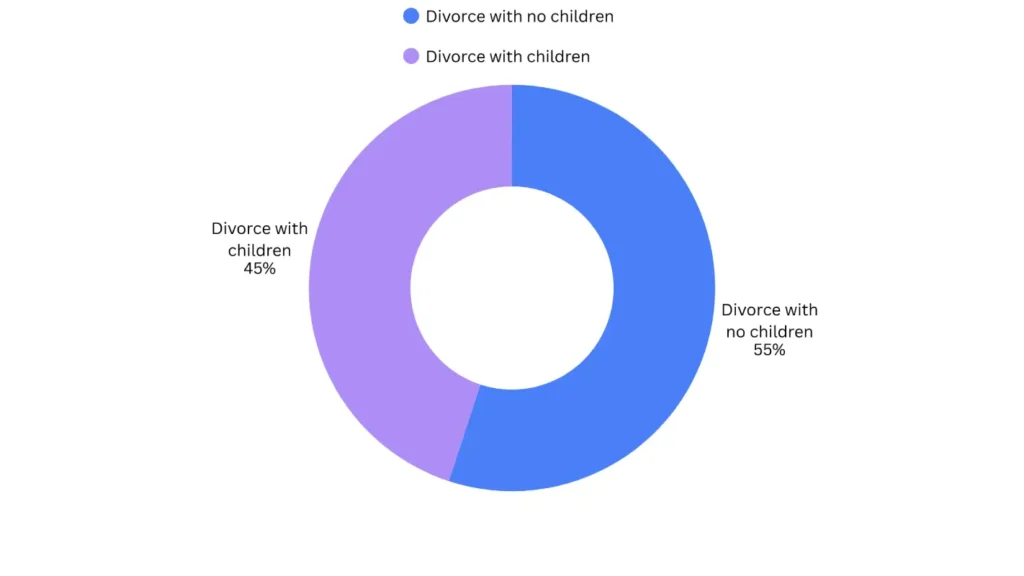
Sources: Texas Judicial Branch 2021 Annual Statistical Report
Common child-related disputes involve conservatorship, parenting schedules, school decisions, holiday arrangements, extracurricular activities, relocation restrictions, and communication expectations.
Because parenting obligations remain ongoing after divorce, these issues often create additional conflict and increase the likelihood of contested proceedings.
Hidden Assets, Disclosure Problems, and Trust Issues
Your divorce may become significantly more complicated if you believe your spouse is withholding financial information or failing to disclose assets fully. Once financial trust issues arise, settlement discussions often become more difficult and more formal.
Examples include:
- Undisclosed bank or investment accounts
- Questions regarding business income
- Missing financial documentation
- Suspected transfers of marital property
- Disputes over separate versus community property classification
These concerns often require additional legal or financial investigation before negotiations can continue effectively.
When Outside Influences Change the Divorce Process
Even productive divorce negotiations may become more difficult when outside influences affect either spouse’s expectations or willingness to compromise. Circumstances can change quickly during the divorce process.
Common outside influences include:
- Advice from family members or friends
- New romantic relationships
- Changes in employment or income
- Pressure from business partners
- New legal advice after consulting counsel
These developments may cause either spouse to revisit terms that previously seemed acceptable.
How Minor Disputes Become Contested Divorce Issues
Many contested divorces in Texas reasons begin with smaller disagreements that grow larger when not addressed early. A dispute involving one issue may affect your willingness to compromise in other parts of the divorce.
Texas Law Help provides additional guidance on how contested and uncontested divorces differ in practice.
As conflict increases, even relatively minor disagreements may begin affecting the broader settlement process and turn a manageable divorce into contested litigation.
What Divorce Complications Mean for Your Texas Case
A complicated divorce case in Texas often develops when you move beyond the general decision to divorce and begin negotiating the practical realities of ending your marriage.
Financial disputes, parenting disagreements, disclosure concerns, and shifting expectations often lead to conflict, even when both spouses initially intend to keep the process amicable.
Because many contested divorce Texas reasons emerge only after negotiations begin, understanding where disputes commonly arise can help you better anticipate why a divorce may become more difficult over time.
If you are preparing for divorce and want to better understand what issues may complicate your case, Texas Divorce Attorneys can help explain how these disputes may affect your situation. Call (612) 662-9393 or visit the Contact Us page to learn more.
Frequently Asked Questions
What makes a divorce contested in Texas?
A divorce becomes contested in Texas when you and your spouse disagree on one or more issues that must be resolved before the court can finalize the case. Common disputes involve property division, child custody, child support, debt allocation, or spousal maintenance. Even one unresolved disagreement can require additional negotiation, mediation, or court involvement before the divorce can proceed to final judgment.
Can an uncontested divorce become contested in Texas?
Yes. An uncontested divorce can become contested if disagreements arise after filing regarding finances, parenting arrangements, property division, or settlement terms. This often happens when spouses agree they want a divorce but later dispute the details of how the final order should be structured or implemented during negotiations.
How long does a complicated divorce take in Texas?
Complicated divorces in Texas usually take several months, and many contested cases last six months to a year or longer, even though the state requires a minimum 60-day waiting period. The level of conflict between spouses, court scheduling, and whether a settlement is reached. Divorces involving contested financial or parenting disputes generally take longer than uncontested cases because they often require discovery, negotiation, mediation, or multiple court hearings.
What financial issues most often delay Texas divorce cases?
Financial issues that commonly delay Texas divorce cases include business valuation disputes, division of retirement accounts, claims of separate property, hidden assets, debt allocation, reimbursement claims, real estate valuation, and disagreements over spousal maintenance. These issues often require additional financial review, documentation, or expert analysis before the parties can reach a settlement.
Do custody disputes automatically make a divorce contested?
In most cases, yes. If you and your spouse cannot agree on conservatorship, parenting schedules, decision-making authority, or other custody-related terms, the divorce generally becomes contested. Child-related disagreements often require additional negotiation or court intervention because parenting issues must be resolved before the divorce can be finalized.