

A custody evaluation in Texas process allows a neutral professional to review your parenting situation when parents disagree about custody arrangements. The evaluator interviews family members, observes interactions, and reviews records before submitting a report to the court, which helps you prepare for the custody process.
When you and the other parent disagree about custody arrangements, the court may need additional information before making a decision. In these situations, a judge can order a professional evaluation to better understand your parenting environment, family dynamics, and your child’s needs. This process helps the court gather information that may not be fully addressed through testimony alone.
A child custody evaluation in Texas involves an evaluator gathering information through interviews, document reviews, and observations of parent-child interactions. Texas Divorce Attorneys often help parents understand how this process works and how courts use these evaluations to assess a child’s best interests when determining custody arrangements.
Custody Evaluations Help Courts Review Parenting Situations
A custody evaluation allows the court to review parenting dynamics in greater detail when testimony alone does not provide enough information. The evaluator gathers information about your parenting practices, the child’s environment, and family interactions so the judge can better understand the situation.
Texas law requires courts to focus on the child’s best interests when determining custody arrangements. Under Texas Family Code §153.002, the best interest of the child must guide all conservatorship and possession decisions.
To help the court evaluate that standard, the evaluator reviews several sources of information about your parenting and household environment. In Texas, this type of evaluation is often part of a broader court-ordered social study used to assess the child’s best interests.
Situations That May Lead Courts To Order Evaluations
Courts do not automatically order custody evaluations in every dispute. However, a judge may request one when a professional assessment could help clarify concerns about the child’s well-being.
You may see an evaluation ordered when cases involve:
- High-conflict custody disputes
- Allegations of neglect or unsafe living conditions
- Concerns regarding parental mental health
- Disagreements about caregiving responsibilities
- Questions about the child’s emotional or developmental needs
In these situations, the evaluation provides structured information from multiple sources instead of relying solely on courtroom testimony.
After reviewing these circumstances, some parents choose to speak with a family law attorney to better understand how a custody evaluation could influence their case.
Steps Typically Involved In A Custody Evaluation
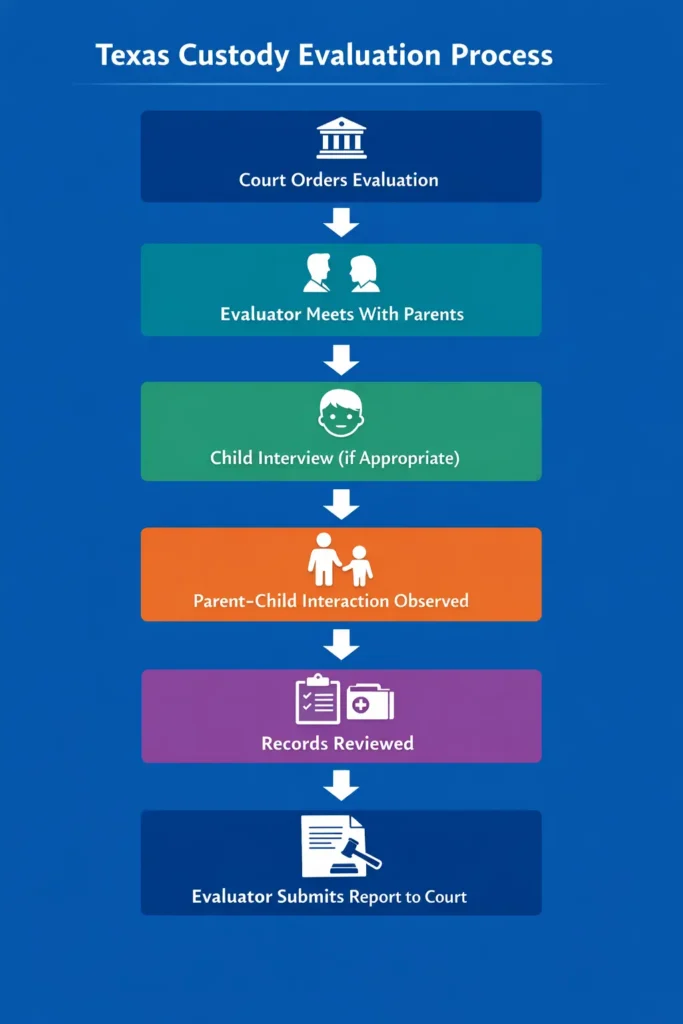
A custody evaluation Texas process usually follows a structured sequence so the evaluator can gather balanced information about you, the other parent, and your child. During the evaluation, you may participate in interviews, and the evaluator may review records and observe interactions with your child. These steps allow evaluators to collect relevant information before preparing a report for the court.
What Happens After the Evaluation Review
After interviews and observations are completed, the evaluator reviews the information gathered during your child custody evaluation process. The evaluator compares statements from both parents, reviews documents, and considers how each household supports your child’s needs.
The evaluator then prepares a written report summarizing findings and submits it to the court. Although recommendations may be included, the judge makes the final custody decision.
Key Factors Evaluators Review in Custody Investigations
During the investigation, the evaluator examines several areas of family life to understand how each parent supports the child’s daily needs.
Evaluators often review factors such as:
- Your involvement in daily caregiving activities
- Stability and safety within your home environment
- Communication between you and the other parent
- Emotional bonds between the child and each parent
- Educational and medical needs of the child
- Compliance with existing court orders
These factors align with the legal principles Texas courts apply when determining conservatorship arrangements under the Texas Family Code.
Preparing Effectively For A Custody Evaluation Meeting
Preparing for the evaluation allows you to present accurate information about your parenting responsibilities and the child’s daily routine. This preparation can also help you stay organized during a child custody evaluation Texas process.
You may find it helpful to gather records that demonstrate your role in the child’s upbringing. Examples include school information, medical records, or documentation showing how parenting time is shared.
Many parents also prepare notes about the child’s activities, schedules, and daily needs so they can answer questions clearly during interviews. Providing consistent and organized information can help the evaluator develop a more complete understanding of your parenting environment.
How Judges Review Custody Evaluation Reports in Texas
After completing the evaluation, the professional submits a written report summarizing interviews, observations, and findings. Judges review this report together with testimony, documents, and other evidence presented in the custody case.
Texas law permits courts to order a social study or similar investigation when additional information may assist the court, as provided in Texas Family Code §107.101. In practice, what many refer to as a custody evaluation is often conducted as part of this court-ordered social study.
The report often contains:
- Summaries of interviews with parents and the child
- Observations of family interactions
- Analysis of parenting dynamics
- Professional recommendations about custody arrangements
Even when the report includes recommendations, the evaluator does not decide the outcome. Texas courts must independently determine custody arrangements based on the child’s best interests and the full record presented in the case.
What Custody Evaluations Mean For Your Case
A custody evaluation gives the court additional insight when parents disagree about custody arrangements. Through interviews, observations, and record review, the evaluator provides a structured assessment of your parenting environment and the child’s needs.
A custody evaluation Texas process does not determine the final custody decision by itself. Instead, it provides professional analysis that the judge considers together with testimony, documentation, and the legal standards contained in the Texas Family Code.
If you want to understand how custody evaluations or conservatorship rules may apply to your circumstances, Texas Divorce Attorneys can help explain how Texas courts typically review these issues during custody proceedings. You may contact us at +1 (612) 662 – 9393 or visit the Contact Us page to learn more.
Frequently Asked Questions
Can you challenge the results of a custody evaluation in Texas?
Yes, you can challenge a custody evaluation if you believe it contains inaccuracies or incomplete information. Courts allow you to question the evaluator’s methods, findings, or conclusions during hearings or through cross-examination. You may also present your own evidence or request clarification. The judge reviews all information before making a final decision based on the child’s best interests.
How are custody evaluators selected or appointed in Texas?
Custody evaluators are typically appointed by the court when additional investigation is needed. Judges may select a qualified professional from an approved list or appoint someone agreed upon by both parties. These professionals must meet requirements under Texas Family Code Chapter 107. The goal is to ensure the evaluator can provide an impartial and informed assessment of the family situation.
Are custody evaluation reports confidential in Texas?
Custody evaluation reports are generally treated as confidential and are used specifically within the court process. Access is typically limited to the judge, attorneys, and involved parties. However, the information may still be discussed during hearings or included in court records. Because the report can influence custody decisions, courts handle it with controlled access rather than making it publicly available.
Can a judge disagree with a custody evaluator’s recommendation in Texas?
Yes, a judge can disagree with a custody evaluator’s recommendation. While the evaluation provides helpful insight, it does not control the outcome of the case. The court must independently review all evidence, including testimony and documents. If the judge finds that other factors better support the child’s best interests, the final decision may differ from the evaluator’s conclusions.
What happens if one parent refuses to participate in a custody evaluation Texas process?
If one parent refuses to participate in a custody evaluation Texas process, the court may still proceed using available information. Judges can consider the lack of participation when evaluating cooperation and credibility. In some cases, the court may issue additional orders or rely more heavily on the participating parent’s evidence. Non-participation does not stop the case but may affect how the court views each parent’s involvement.