
You can move forward with a divorce without a lawyer in Texas by filing required documents, meeting residency rules, and following court procedures on your own. Texas courts allow individuals to handle their own cases, often referred to as self represented divorce Texas, but you must still meet deadlines, provide proper notice, and satisfy all legal requirements before a judge can finalize your divorce.
If you are thinking about ending your marriage, you may question whether you need legal representation to begin. In Texas, you can complete a divorce without a lawyer in Texas by filing the required documents and following court procedures on your own. However, the process still involves formal steps such as notice requirements, waiting periods, and court approval before a divorce becomes final.
Understanding how these steps work can help you avoid confusion during the process. Texas Divorce Attorneys provide clarity on filing procedures, documentation, and court expectations so you can better understand how each stage applies to your situation.
Filing Divorce Without Lawyer In Texas Process
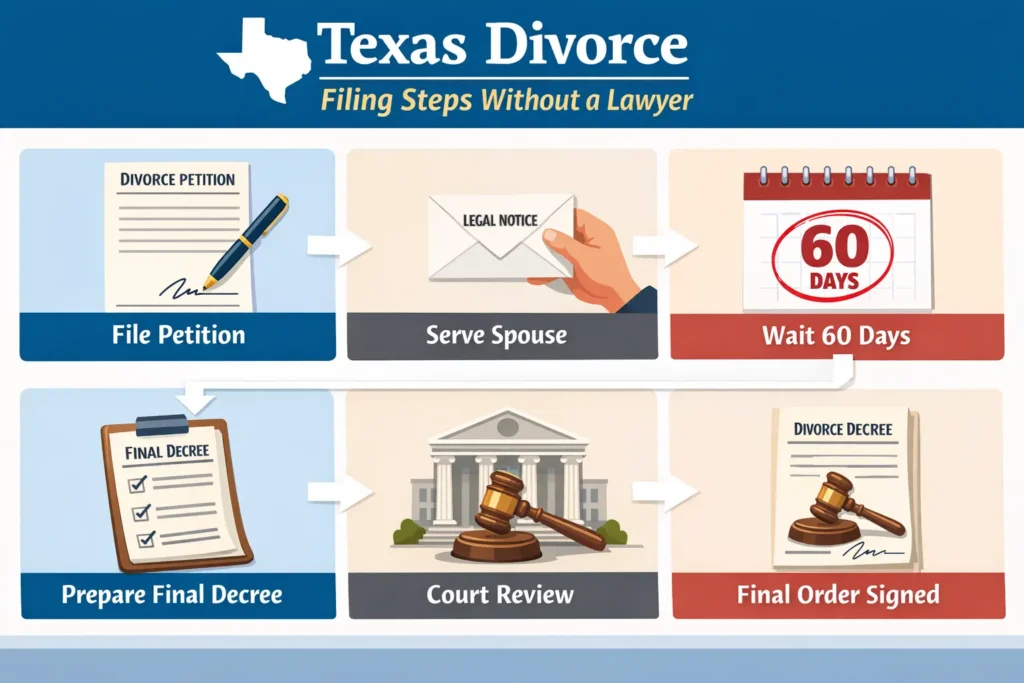
You can file for divorce without a lawyer in Texas by submitting the correct paperwork and following court procedures. The court applies the same legal standards whether or not you have representation.
To begin, you generally need to:
- File an Original Petition for Divorce in the correct county
- Pay filing fees or request a waiver
- Ensure your spouse is formally served with divorce papers
- Wait the required 60-day minimum period
According to Texas Family Code §6.301, you must meet residency requirements before filing, which generally means living in Texas for at least six months and in the filing county for at least 90 days.
Court Requirements And Legal Responsibilities In Divorce Cases
You are responsible for meeting all legal requirements even without an attorney. Courts expect you to follow the same rules that apply to cases with a lawyer.
This includes:
- Completing forms accurately
- Meeting court deadlines
- Providing required documents and supporting information
- Appearing at hearings when required
Handling a divorce without lawyer Texas requires attention to detail because errors may delay the process. In a self represented divorce Texas, the court still reviews your filings for compliance before issuing a final order.
Situations Where Self Representation May Work Best
A self represented divorce Texas may be more manageable when your case involves limited issues and both parties cooperate. While the legal process still applies, fewer disputes can simplify how the case moves forward.
Common situations include:
- No children involved
- Minimal or agreed property division
- No request for spousal maintenance
- Mutual agreement on key terms
In these situations, you may prepare a written agreement for court review. The judge evaluates whether the agreement meets legal standards before finalizing the divorce.
Risks And Challenges Of Handling Divorce Alone
Handling your own divorce can present procedural and legal challenges. You must manage filings, deadlines, and court expectations without professional guidance, which increases the risk of mistakes.
Understanding where issues commonly arise can help you prepare and avoid delays. Even in straightforward cases, small errors in documentation or missed required steps can affect how your case progresses and how the court reviews your filings.
Common Mistakes In Self Represented Cases
Mistakes often occur when required steps are incomplete or misunderstood. These errors can delay your case or require corrections before the court proceeds.
Common problems include:
- Incorrect or missing information in documents
- Failure to properly serve your spouse
- Missed filing deadlines
- Limited understanding of court procedures
According to Texas Family Code §6.702, courts generally require a 60-day waiting period before finalizing a divorce, although limited exceptions may apply in cases involving family violence.
Legal Options Available When Divorce Issues Become Complicated
You can begin your divorce independently and seek legal guidance later if needed. Texas law allows you to transition from self-representation if circumstances change.
For example, you may need additional support if:
- Disputes arise over property or parenting matters
- Court procedures become unclear
- Additional filings or hearings are required
In these situations, understanding your options can help you adjust your approach and continue the process without unnecessary delays.
Final Thoughts On Divorce Without Lawyer Texas
A divorce without lawyer Texas is allowed under Texas law, but you remain responsible for following all required procedures, timelines, and filing standards. Even in straightforward cases, the court expects accurate documentation, proper notice, and compliance with legal requirements before issuing a final decree. While some individuals complete the process independently, others may encounter complications that affect how the case progresses.
Taking time to understand the process can help you avoid delays and ensure your case moves forward correctly. Texas Divorce Attorneys can help explain how these requirements apply to your situation and what steps may be relevant. If you want to discuss your situation in a clear and supportive way, you may call +1 (612) 662 – 9393 or visit the Contact Us page to learn more.
Frequently Asked Questions
Do you have to attend a final hearing in a Texas divorce without a lawyer?
In many Texas divorce cases, you must still appear for a final hearing before a judge signs the divorce decree, even if the case is uncontested. In a divorce without lawyer Texas situation, courts may still require a prove-up hearing or specific documentation before approval. Requirements can vary by county and case details.
What happens if your spouse cannot be located during divorce?
If your spouse cannot be located, you may request permission from the court to use alternative service methods. This can include service by publication or posting, depending on your situation. You must show that you made reasonable efforts to find your spouse before the court allows this option, and additional steps may be required before your case proceeds.
Can spouses agree on everything and still need court approval?
Yes, even if both spouses agree on all terms, the court must still review the final paperwork before granting the divorce. A judge may look at whether the decree is complete, legally clear, and properly submitted. Agreement between spouses can simplify the process, but it does not replace the need for a final court order in Texas.
Can your spouse waive formal service in a Texas divorce?
Yes, in some Texas divorce cases, a spouse may sign a waiver of service instead of being formally served by a process server or sheriff. The waiver must meet legal requirements and is not the same as agreeing to the divorce terms. It only addresses notice and participation, so the rest of the case still must be completed correctly.
Are court forms the same across all Texas counties?
No, court forms and filing procedures can vary slightly depending on the county where you file. While Texas provides general forms, some courts require additional local documents or specific formatting. Checking your county clerk or district court requirements helps ensure you submit the correct paperwork and follow the appropriate local procedures for your case.