

Divorce waiting period in Texas refers to the required time between filing a divorce petition and finalizing your case. In most situations, you must wait at least 60 days before a court can grant a divorce. This rule applies to both contested and uncontested divorce cases, although limited exceptions may apply in certain situations recognized under Texas law and specific court findings.
When you begin a divorce, understanding the timeline can help you plan your next steps. The divorce waiting period in Texas sets a minimum timeframe before your case can be finalized, regardless of whether your divorce is simple or involves multiple issues.
This rule applies if both spouses agree on all terms. Courts require this waiting period before signing a final decree. Knowing how the timeline works helps reduce confusion about when your divorce may be completed. Texas Divorce Attorneys often help individuals understand how this waiting period fits into the overall process and how it may affect case progress.
Mandatory Waiting Period Requirements Under Texas Law
Texas law requires you to wait at least 60 days after filing before your divorce can be finalized. This waiting period begins once your Original Petition for Divorce is filed with the court and applies in most cases.
Under Texas Family Code §6.702, courts generally cannot grant a divorce until this period has passed. This requirement applies whether your divorce is contested or uncontested.
Even if both spouses agree on all terms, the court must still wait until the required time has passed before signing a final decree. This rule ensures a consistent legal process and gives time for required steps to be completed.
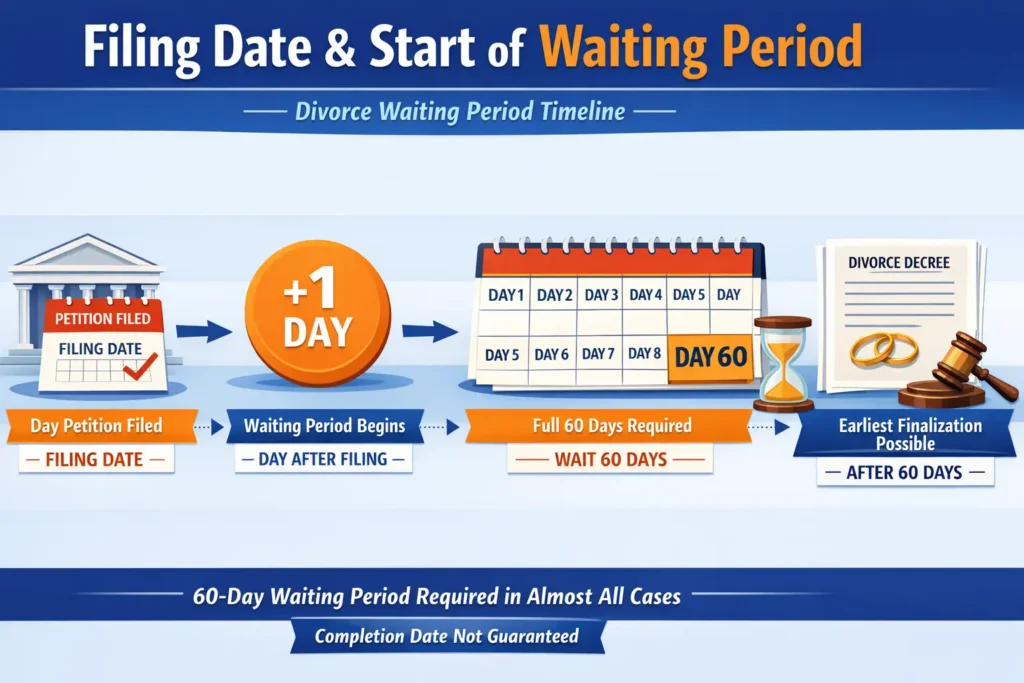
Filing Date And Start Of Waiting Period Timeline
The Texas divorce waiting period begins the day after your divorce petition is filed with the court. The filing date itself is not counted, which can affect how the timeline is calculated.
Even if you and your spouse have already reached an agreement, the full 60 day waiting period Texas divorce cases require must pass. This rule establishes when your divorce becomes eligible for finalization, but additional steps may still be required before completion.
Exceptions That May Shorten Waiting Period Rules
Texas law allows limited exceptions to the 60 day waiting period in specific situations. These exceptions are not automatic and must meet legal requirements before a court may shorten the timeline.
Approval depends on whether your situation meets the legal conditions required under Texas law. These situations are most often related to family violence, where delaying the divorce may not be appropriate based on safety concerns or recorded evidence.
Family Violence Exception In Divorce Cases
Family violence may allow a court to finalize a divorce sooner than the standard waiting period. This exception often applies when there is a protective order, court finding, or other qualifying evidence of family violence.
Courts evaluate protective orders, criminal findings, or other records of abuse before allowing a shorter timeline. The decision depends on whether the available records support the exception under Texas law.
Effect Of Waiting Period On Divorce Timeline
The waiting period does not guarantee your divorce will be finalized in 60 days. In many cases, additional factors extend the timeline beyond the minimum requirement.
If your divorce includes disagreements about property, children, or other issues, the process may extend beyond the minimum timeframe. Court availability, required filings, and negotiations can also affect timing.
In limited situations, courts may shorten the waiting period under Texas Family Code §6.702(b) if specific legal conditions are met. The overall timeline depends on how efficiently the case progresses.
Actions Completed During Divorce Waiting Period
During the waiting period, you and your spouse may work on resolving issues related to your divorce.
This may include:
- Negotiating agreements related to property or parenting
- Exchanging financial information
- Preparing required legal documents
- Finalizing paperwork in uncontested cases
- Beginning early steps in contested cases
In uncontested cases, this time is often used to finalize paperwork so everything is ready for court approval. In contested cases, early negotiations or early steps in the process may begin. Using this time effectively can help reduce delays once your case becomes eligible for finalization.
Final Perspective On Texas Divorce Waiting Period
The Texas divorce waiting period establishes a required minimum timeline before a divorce can be finalized. In most cases, you must wait at least 60 days from the date you file your petition before the court can grant your divorce.
This rule applies regardless of whether your case is contested or uncontested and establishes when your case can move toward final completion. However, the overall timeline may still extend beyond 60 days depending on court schedules, required filings, and whether any issues remain unresolved.
Understanding how this waiting period works can help you better plan your next steps and avoid confusion about your case timeline. Texas Divorce Attorneys can help explain how the Texas divorce waiting period applies to your situation. You may call (612) 662-9393 or visit the Contact Us page to learn more.
Frequently Asked Questions
What happens if you try to finalize a divorce before 60 days in Texas?
If you attempt to finalize your divorce before the required waiting period ends, the court will not approve or sign the final decree. Even if all paperwork is complete, judges must follow the statutory timeline. You may need to reschedule your final hearing or submission, which can delay your case if timing requirements are not properly calculated.
Does the waiting period apply to annulments in Texas?
No, the waiting period does not apply to annulments in the same way it applies to divorce cases. Annulments follow a separate legal process and may proceed on a different timeline depending on the circumstances. However, court procedures, required filings, and scheduling can still affect how quickly the case is reviewed and finalized once it is submitted.
How does the waiting period affect remarriage timing in Texas?
Yes, the waiting period can affect when you are legally allowed to remarry. A divorce must first be finalized before a new marriage is valid under Texas law. Even after the Texas divorce waiting period ends, remarriage is only possible once the final decree is signed. Additional legal restrictions may apply, so timing depends on when your divorce is officially completed by the court.
Does the 60-day waiting period include weekends and holidays?
Yes, the 60-day waiting period runs continuously and includes weekends and holidays. The timeline is based on calendar days, not business days. This means your case becomes eligible for finalization once the full 60 days have passed, regardless of court schedules. However, court availability may still affect when your divorce is officially completed.
Can temporary orders be issued during the waiting period?
Yes, courts can issue temporary orders while the waiting period is ongoing. These orders may address issues such as child custody, support, property use, or financial responsibilities. Temporary orders help establish structure during the divorce process and remain in effect until the final decree is signed or modified by the court.