

If your spouse does not respond after being served, a default divorce in Texas allows the court to proceed without their participation. You must still follow required steps, including service, waiting periods, and presenting your case. The judge reviews your requests before granting a final decree, ensuring legal standards are met even when your spouse does not take part in the process.
When your spouse does not respond after being served with divorce papers, the case does not stop. Instead, the court allows you to continue through a process known as a default divorce in Texas. This situation often raises questions about deadlines, court requirements, and what decisions a judge can make without the other spouse’s input.
Texas Divorce Attorneys explain how courts handle non-response situations by focusing on proper procedure, legal timelines, and required proof. Understanding how this process works helps you prepare for each step and ensures your case moves forward in compliance with Texas family law.
Understanding Default Divorce Process Without Spouse Response
A default divorce occurs when your spouse fails to respond within the required time after being served. In Texas, this means no answer is filed by the deadline, allowing you to move forward without their participation.
When this happens, the court still requires you to complete the full process. You must prove proper service, meet the waiting period, and present your requested terms. The absence of a response does not automatically grant your requests. Instead, the judge reviews your case to ensure compliance with Texas law.
Legal Timeline Requirements Before Default Divorce Finalization
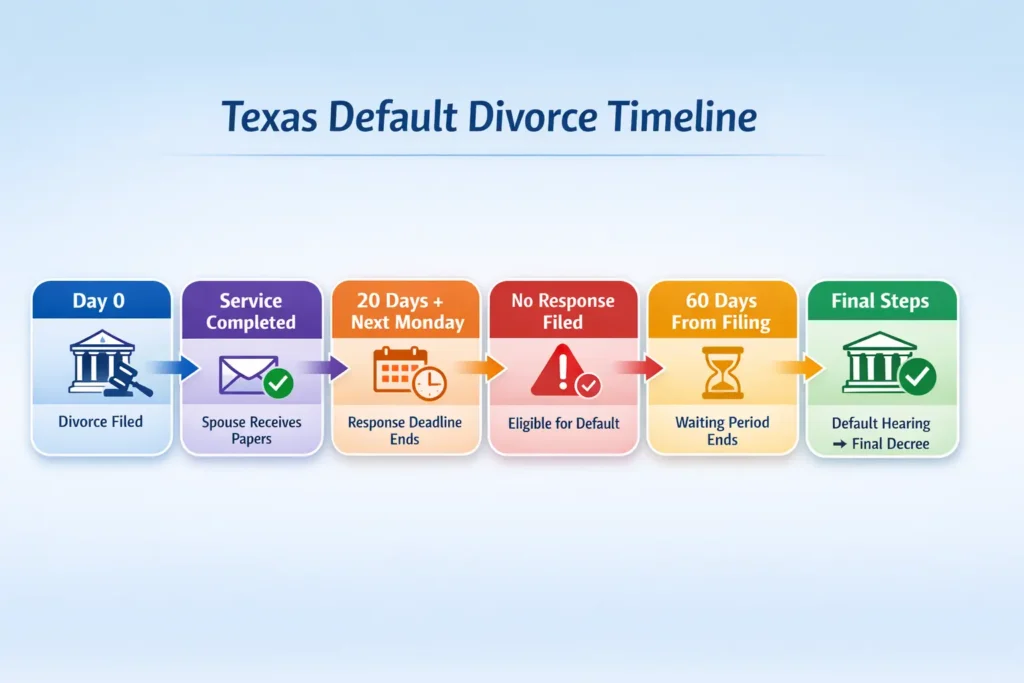
You cannot finalize a default divorce immediately after your spouse fails to respond. Texas law requires specific timing rules that must be followed before the court will grant a final decree.
According to Texas Family Code §6.702, a divorce cannot be finalized until at least 60 days after filing. This waiting period applies even in default situations.
In addition, your spouse generally has until the Monday following 20 days after service to file an answer. If that deadline passes with no response, you may proceed toward a default hearing, provided all procedural requirements are satisfied.
Court Requirements To Proceed Without Spouse Participation
Even when your spouse does not respond, the court requires you to prove your case before granting a divorce. A default judgment is not automatic.
To proceed, you must typically show:
- Proper service of divorce papers
- Expiration of the response deadline
- Compliance with the 60-day waiting period
- A complete proposed final decree
At your hearing, the court may require testimony to confirm key facts about your marriage, children, and property. This ensures that the outcome remains consistent with Texas law, even without input from the other spouse.
Evidence And Testimony Required During Default Hearing
You must present sufficient evidence to support your requested terms at the default hearing. The judge relies only on the information you provide when your spouse does not participate.
This stage focuses on confirming facts and ensuring your requests follow Texas legal standards. Clear preparation helps the court review your case efficiently and reduces the risk of delays before the final decree is approved.
Required Proof For Default Divorce Hearing
You must provide testimony and documents that support your requests. This includes confirming facts about your case and demonstrating that your proposed terms are reasonable.
Common elements you may need to address include:
- Date of marriage and separation
- Residency requirements
- Property and debt division details
- Child-related arrangements, if applicable
Courts may also review whether your requests align with legal standards, especially in cases involving children.
Property And Custody Decisions In Default Divorce Cases
A default divorce still requires the court to evaluate property division and child-related decisions carefully. Your spouse’s absence does not remove the court’s responsibility to ensure compliance with Texas law.
In Texas, property division must be “just and right” under Texas Family Code §7.001. This means the judge reviews your proposed division rather than automatically approving it.
If children are involved, the court evaluates arrangements based on the child’s best interest. This includes reviewing conservatorship, possession schedules, and support. Even in situations where a spouse fails respond divorce Texas cases, the court must ensure outcomes remain legally appropriate. This reflects how default divorce Texas cases still require judicial oversight.
Completing Default Divorce Texas Process And Final Decree
Once the court approves your case, the judge signs a Final Decree of Divorce. This document formally ends the marriage and outlines all required terms. It should clearly reflect how property is divided, how debts are allocated, and any parenting arrangements or support obligations, if applicable.
After the decree is signed, you are responsible for complying with all terms outlined in the order. The decree becomes legally binding even if your spouse did not participate in the process. Careful preparation before finalization helps ensure that all details are accurate and enforceable.
Important Considerations In Default Divorce Texas Cases
A default divorce in Texas allows you to move forward when your spouse does not respond, but it still requires careful compliance with legal procedures. You must meet deadlines, prove proper service, and present clear evidence to support your requests. Courts review your case to ensure compliance with Texas law, especially in property division and child-related matters.
Because the process continues without the other party, accuracy becomes especially important at each step. Errors in service, documentation, or testimony can delay finalization or require corrections. Understanding how courts evaluate these cases helps you prepare more effectively and avoid unnecessary setbacks.
Texas Divorce Attorneys can help explain how the process applies to your situation and what steps may be required. You may call (612) 662-9393 or visit the Contact Us page to learn more.
Frequently Asked Questions
Can a default divorce be reversed after it is finalized?
Yes, a finalized default divorce can be challenged through specific legal procedures such as requesting a new trial or filing a bill of review. Courts check whether your spouse received proper notice and a fair opportunity to respond. Timing and legal standards are strict, so the outcome depends on how quickly the issue is raised and the facts presented.
What happens if your spouse was never properly served?
If your spouse was never properly served, the court cannot grant a valid default judgment. Texas law requires proof that the other party received official notice before the case can move forward. Without proper service, any default divorce order may be challenged and potentially set aside, which can delay the process and require you to restart key procedural steps.
Can a default divorce include spousal support orders?
Yes, a default divorce can include spousal support orders if the requesting spouse presents sufficient evidence to justify it. The court reviews financial information, eligibility requirements, and statutory factors before granting support. Even without a response, the judge must ensure the request meets Texas legal standards rather than approving it automatically based only on one party’s request.
Do you need witnesses at a default divorce hearing?
No, you typically do not need additional witnesses at a default divorce hearing, but you must provide clear testimony under oath. In many cases, your statements alone may be sufficient if they establish all required facts. However, supporting documents such as financial records or parenting plans may still be necessary to help the court evaluate your requests accurately.
Does a default divorce Texas impact enforcement of court orders later?
Yes, a default divorce in Texas can affect how court orders are enforced later because the final decree establishes binding legal obligations. Once entered, both parties must follow its terms regarding property, custody, and support. If issues arise, enforcement actions may rely on the clarity and completeness of that original order, which is why accuracy during the default process is important.