

When you are going through a divorce with children in Texas, the court focuses on your child’s best interests when deciding custody, support, and parenting arrangements. You will need to understand conservatorship, possession schedules, and financial responsibilities. These decisions shape your child’s routine and your parental rights, so knowing how Texas courts evaluate these issues helps you prepare for the legal process and make informed decisions.
When your marriage ends and children are involved, the legal process becomes more detailed because the court must address parenting, support, and decision-making responsibilities. A divorce with children in Texas requires you to consider how custody, visitation, and financial obligations will be structured under Texas law.
Texas Divorce Attorneys explain how courts evaluate parenting arrangements, apply legal standards, and structure orders that affect your daily responsibilities. Understanding these rules helps you approach the process with clarity and recognize how each decision may affect your child’s stability and long-term care.
Texas Courts Prioritize Child’s Best Interests Standard
Texas courts base all custody decisions on the child’s best interests, especially in a divorce with children Texas case where parenting arrangements must support long-term stability. This standard guides how judges evaluate parenting plans, living arrangements, and decision-making authority.
According to Texas Family Code §153.002, the best interest of the child must always be the primary consideration in determining conservatorship and possession issues. Courts apply this standard when assessing each parent’s role in the child’s life.
Under Texas law, courts review several factors when determining what supports a child’s well-being. These commonly include:
- Each parent’s ability to provide stability
- The child’s emotional and physical needs
- Existing parent-child relationships
- Any history affecting safety or care
Conservatorship Determines Parental Rights And Responsibilities Structure
Conservatorship defines how you and the other parent share legal rights and duties. Many cases result in joint managing conservatorship, where both parents share decision-making authority. However, the court may adjust specific rights depending on the circumstances of the case.
These decisions can address who determines the child’s primary residence, who has authority over education and medical care, and how financial responsibilities are handled. This structure plays an important role in shaping your long-term involvement in your child’s life and your day-to-day responsibilities as a parent.
Parenting Time Schedules Define Daily Child Arrangements
Parenting time schedules establish when your child stays with each parent and how routines are maintained after separation. These schedules are structured to promote consistency, reduce conflict, and support ongoing parent-child relationships. Courts often rely on standard frameworks unless adjustments better serve the child’s needs.
Understanding how these schedules function helps you anticipate how time is divided and how expectations are applied in practice.
Standard Possession Order In Texas Cases
A Standard Possession Order outlines when each parent spends time with the child and creates a predictable routine. This schedule is commonly used unless the court determines a different arrangement better supports the child.
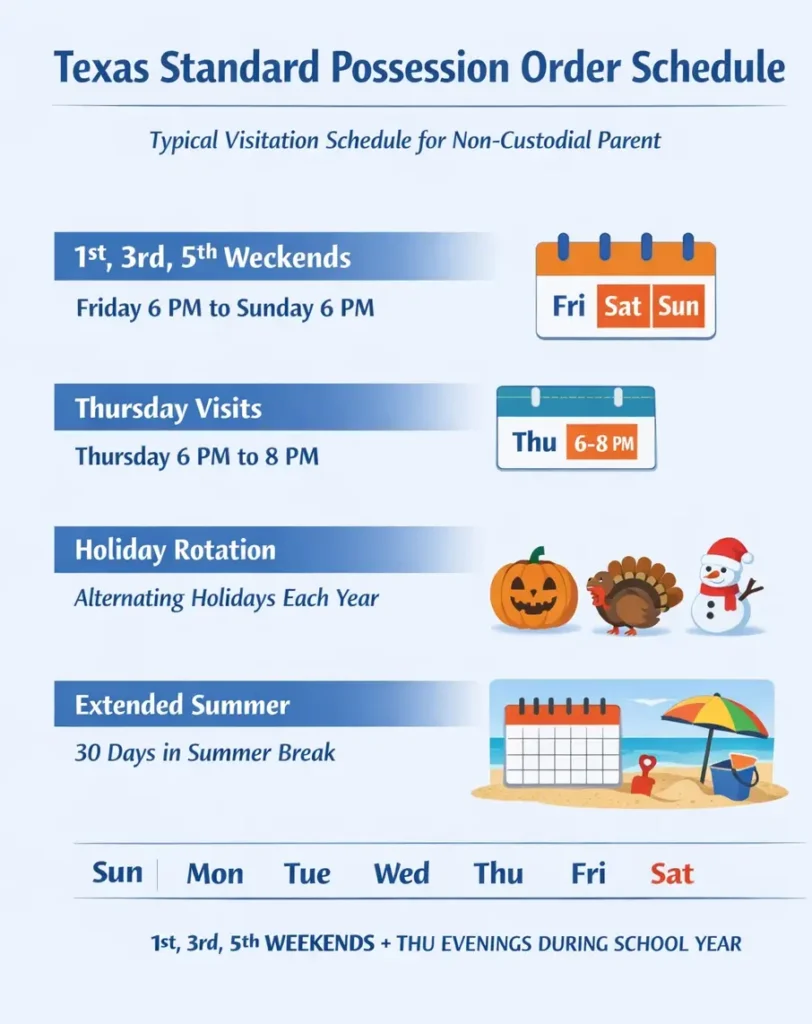
You typically follow structured time periods, including weekends, holidays, and extended summer possession. These schedules provide consistency and reduce uncertainty while helping both parents maintain regular involvement in the child’s daily life.
Child Support Obligations Based On Income Guidelines
Child support ensures your child’s financial needs are met after separation and often connects closely to child custody issues in Texas divorce cases, where financial responsibility and parenting time must align. Support is typically calculated based on the paying parent’s income and established guideline percentages.
According to Texas Family Code §154.125, courts generally apply set percentages tied to income and the number of children involved. In addition, courts may review specific circumstances that affect financial responsibility, such as the cost of health insurance, educational or childcare expenses, and any special medical or developmental needs the child may have.
Custody Disputes And Legal Factors Courts Consider
Custody disputes arise when parents cannot agree on conservatorship or parenting time arrangements. In these situations, courts review the facts to determine what supports the child’s overall well-being and stability.
Judges evaluate a range of factors, such as the level of communication and cooperation between parents, the stability of each household, and the roles each parent has previously played in caregiving. Courts may also consider any concerns that could affect the child’s safety. These evaluations help guide decisions and allow courts to issue enforceable orders that reflect the child’s needs and long-term stability.
What Divorce With Children Texas Means For Families
A divorce with children Texas requires you to focus on parenting responsibilities, financial obligations, and long-term stability for your child. Courts structure conservatorship, possession schedules, and support orders to promote consistency and protect the child’s best interests. As a result, each decision you make during the process can affect daily routines and future arrangements.
When you understand how Texas courts evaluate these factors, you can better prepare for each stage of your case and avoid unnecessary complications. Clear expectations around custody and support help you approach the process with confidence and structure. Texas Divorce Attorneys can help explain how these legal standards apply to your situation. You may call (612) 662-9393 or visit the Contact Us page to learn more.
Frequently Asked Questions
What happens if one parent wants to relocate with the child?
Relocation can affect custody because moving may change the child’s routine and access to both parents. Courts review whether the move supports the child’s best interests and may modify possession schedules or geographic restrictions. Judges consider factors such as distance, impact on relationships, and stability before approving or limiting relocation requests during or after a custody order is in place.
Does remarriage affect custody arrangements?
Yes, remarriage can affect custody if it changes the child’s living environment or daily stability. Courts may review whether the new household supports the child’s well-being. However, remarriage alone does not automatically change custody orders unless a parent files for modification and demonstrates that the change materially affects the child’s circumstances or best interests.
What role does mediation play in custody cases?
Mediation helps parents resolve custody disagreements without going to trial. In many Texas cases, courts require mediation before a final hearing. During mediation, both parents work with a neutral third party to reach an agreement on parenting arrangements. If successful, the agreement can be submitted to the court for approval and may become part of the final order.
How are parenting coordinators used in cases?
Parenting coordinators are used to help parents manage ongoing conflicts and improve communication after court orders are in place. They assist with scheduling disputes, communication issues, and compliance with parenting plans. Their role focuses on reducing conflict and supporting consistent routines for the child, but they do not make binding legal decisions or replace the authority of the court.
What documents are needed when filing for custody?
You will need several documents when filing for custody in a divorce with children Texas, including the petition, financial information, and any existing agreements related to the child. Courts may also require details about the child’s living situation, school, and healthcare. Providing complete and accurate documentation helps the court review your case efficiently and establish appropriate custody and support orders.