

Hiring a divorce attorney in Texas becomes important when your divorce turns contested and a judge must resolve disagreements about custody, finances, or property division. Legal guidance can help you understand court filings, organize evidence, and navigate mediation or trial procedures that affect how unresolved disputes are decided.
When your divorce becomes contested, disagreements about property division, parenting arrangements, or financial responsibilities may require court involvement. In these situations, a judge reviews financial records, documentation, and testimony before issuing orders that determine how the issues will be resolved.
Understanding how contested divorce cases move through the court system can help you prepare for each stage of the process. Texas Divorce Attorneys can explain filing requirements, document exchanges, mediation procedures, and the steps that occur before a trial. They can help you understand how contested divorce cases proceed under Texas family law and what preparation may be needed during the process.
Common Disputes That Lead To Contested Divorce
Your divorce becomes contested when you and your spouse cannot reach agreement on important legal issues. When negotiations do not resolve those disagreements, the court must review the evidence and decide how the disputes should be resolved.
In a contested divorce, you and your spouse may disagree about issues such as:
- Child custody and visitation schedules
- Division of marital property and debts
- Requests for spousal maintenance
- Ownership of retirement accounts or business interests
- Parenting decision-making authority
Even one unresolved issue can require court review. Because these disagreements affect parenting arrangements and financial responsibilities, judges evaluate documentation, testimony, and financial records before issuing final orders.
Typical Timeline of a Contested Texas Divorce Case
When your divorce becomes contested, the case follows a structured court process before a judge issues a final decree. As the case moves forward, you may encounter several stages including court filings, hearings, document exchanges, mediation sessions, and possibly a trial.
The infographic below illustrates how contested divorce cases typically progress through the Texas court system.
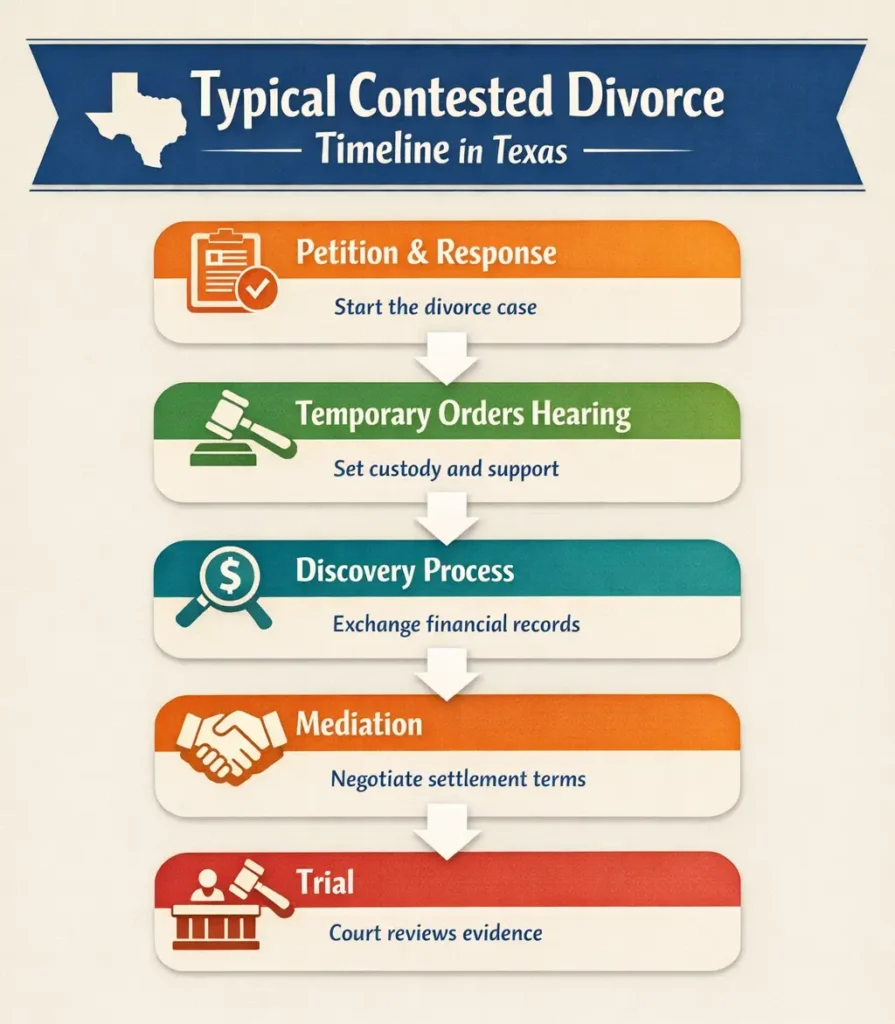
Texas law also requires a minimum 60-day waiting period between filing and finalizing a divorce under Texas Family Code §6.702.
Because the exchange of financial documents, mediation sessions, and court hearings take time, contested divorces often last several months or longer depending on the number of disputes the court must review.
Strategic Advantages Of Legal Representation In Litigation
Contested divorce cases often involve multiple procedural steps as the case moves through litigation stages. Each stage requires accurate filings, organized documentation, and compliance with court rules governing how evidence is presented and reviewed.
A Texas divorce attorney may assist with responsibilities such as:
- Preparing court filings and legal motions
- Organizing financial and parenting documentation
- Managing document exchanges during the case
- Participating in mediation discussions
- Presenting information during hearings or trial
If you would like to review how these legal procedures may apply to your situation, you may speak with Texas Divorce Attorneys by calling (612) 662-9393
Financial And Custody Disputes Requiring Legal Guidance
Disputes involving parenting arrangements or financial responsibilities often require careful preparation before the court reviews the case. Judges evaluate documentation, testimony, and financial records when determining how responsibilities should be structured after divorce. Because these issues affect long-term parenting arrangements and financial obligations, individuals sometimes consult legal counsel or a contested divorce lawyer Texas families work with to understand court procedures and prepare documentation.
Factors Courts Review During Custody Decisions
Texas courts determine custody using the best interest of the child standard, which guides how judges evaluate parenting disputes.
Judges evaluate several factors when reviewing parenting disputes, including:
- Stability of each parent’s home environment
- Ability to provide consistent care for the child
- The relationship between the parent and child
- Communication between parents regarding parenting responsibilities
- Evidence presented during hearings
These evaluations help courts determine custody arrangements that support the child’s long-term well-being.
When Legal Guidance Matters In Contested Divorce Cases
A contested divorce involves court procedures, documentation requirements, and decisions that may affect parenting arrangements and financial responsibilities. Texas courts evaluate custody disputes according to the best interest of the child standard under Texas Family Code §153.002. Understanding these procedures helps you prepare for mediation sessions, hearings, and possible trial proceedings.
Working with a divorce attorney in Texas allows you to review your legal options, organize documentation, and better understand how courts evaluate disputed issues. Texas Divorce Attorneys assist individuals by explaining contested divorce procedures and helping clients prepare for the steps involved in the court process.
If you would like more information about contested divorce procedures in Texas, you may contact us by calling (612) 662-9393 or visiting the Contact Us page.
Frequently Asked Questions
How does discovery work in a contested divorce?
Discovery is the process where both spouses exchange financial information and documents relevant to the divorce case. During discovery, attorneys may request records such as tax returns, bank statements, property documents, and other financial materials. This exchange allows both parties to review the same evidence before mediation or trial. Discovery helps clarify disputed financial issues so the court can evaluate accurate information during contested divorce proceedings.
Can expert witnesses be used in contested divorce cases?
Yes. Expert witnesses may participate in contested divorce cases when specialized knowledge is needed. Courts sometimes rely on financial analysts, business valuation professionals, or child custody evaluators to provide reports or testimony. These experts help explain complex matters such as asset valuation, income analysis, or parenting considerations. Their evaluations can help the court understand evidence that may affect property division or custody decisions.
What happens during a deposition in a divorce case?
A deposition is a formal interview conducted under oath before trial. During a deposition, attorneys ask questions about finances, property ownership, parenting responsibilities, and other issues relevant to the divorce. A court reporter records the testimony so it can be reviewed later during negotiations or trial preparation. Depositions help both parties evaluate evidence and understand how each side may present their case in court.
How can business ownership affect a contested divorce?
Business ownership can affect a contested divorce because the court may need to determine the value of the business and whether it is considered marital property. Financial experts or valuation specialists sometimes review business records to estimate its value. The court evaluates financial documentation and testimony to decide whether the business should be divided, awarded to one spouse, or balanced through other property allocations.
When might legal guidance help you understand court procedures?
Legal guidance may help you understand court procedures when your divorce involves disputes that require hearings, mediation, or trial preparation. A Texas divorce attorney can explain filing requirements, evidence rules, and the steps involved in contested divorce litigation. This guidance can also help you review financial records, prepare documentation, and understand how judges evaluate disputes involving custody, property division, and financial responsibilities.